The confessional power-sharing model that governs Lebanon is not a defective compromise but a deliberate architecture that concentrates power among sectarian elites, erodes state institutions, and leaves the country without effective leverage in its direct talks with Israel or any credible path to reform.
As of April 2026, Lebanon is engaged in its first direct negotiations with Israel in decades under U.S. mediation. These exploratory talks focus on border security and long-term arrangements, yet Lebanese officials enter them with limited authority. The reason lies not in temporary crisis but in the country’s foundational political order. The sectarian system, enshrined in the 1989 Taif Agreement and rooted in earlier pacts, allocates top offices by religious community: Maronite Christian president, Sunni prime minister, Shia speaker of parliament. It was intended to prevent any single group from dominating after civil war. In practice, it has entrenched a cartel of leaders who treat public resources as patronage tools and veto threats to their interests.
The intentional design of Lebanon’s sectarian system
Lebanon’s confessional framework divides political and administrative roles along sectarian lines. Cabinet posts, parliamentary seats, and senior civil service positions follow strict quotas tied to the 18 recognized religious communities. This structure requires consensus among sect leaders for major decisions. The result is not paralysis by accident but negotiated power-sharing that keeps decisions within elite circles.
The system channels public funds, jobs, and contracts through sectarian networks. Leaders deliver services—employment, health care, education—to their communities in exchange for loyalty. This clientelist model rewards those who control the flow of resources rather than those who build efficient institutions. Corruption becomes embedded because accountability mechanisms cross sectarian lines only with unanimous approval, which is rarely granted when it threatens an insider.
How sectarian quotas enable elite capture
The quotas create mini power centers that operate like parallel authorities. Each major sect maintains its own patronage network, often described by analysts as competing or cooperating “mini deep states.” Political families and party leaders have held dominant positions for decades, cycling through government roles while shielding allies from scrutiny.
This capture extends to the economy. Pre-crisis financial policies, banking practices, and reconstruction contracts were distributed to maintain sectarian balance rather than maximize national benefit. The 2019 collapse exposed how these arrangements masked deficits and enabled enrichment. Post-collapse probes, including those into central bank misconduct, have advanced in fits and starts precisely because advancing them risks upsetting the balance that protects all participants.
The non-obvious mechanism is self-reinforcement. Elites have little incentive to dismantle a system that grants them veto power and access to state resources. Public demands for reform are absorbed into sectarian bargaining, where each side demands concessions for its community before any change proceeds.
The erosion of state capacity
Lebanon’s sectarian system systematically weakens central institutions. The judiciary, security forces, and regulatory bodies remain fragmented by confessional appointments. Prosecutors face political pressure when cases touch powerful figures. Oversight commissions lack enforcement teeth because their leadership reflects the same quotas that shield the elite.
The state’s inability to deliver basic services—reliable electricity, waste management, public transport—stems directly from this design. Resources are diverted to sectarian client networks rather than invested in national infrastructure. The result is a hollowed-out apparatus that cannot enforce laws uniformly or collect revenue efficiently. Citizens experience the state as both absent and extractive, fueling widespread distrust. Recent opinion data show near-universal recognition of entrenched corruption, with trust in parliament and other core bodies at historic lows.
This erosion is not a bug. It is the predictable outcome of a system that prioritizes elite consensus over institutional autonomy. Strong, independent state bodies would threaten the very patronage that sustains the current order.
Geopolitical weakness in regional negotiations
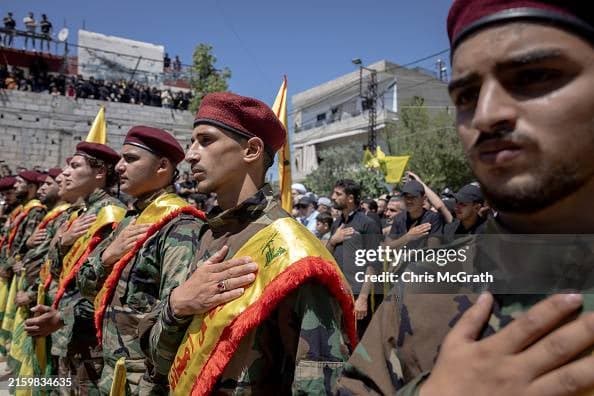
The current direct talks with Israel highlight the system’s external costs. Lebanese negotiators represent a government that does not exercise full control over its territory or armed groups. Hezbollah operates as a parallel military force aligned with one sectarian bloc, yet it shapes national security policy without formal accountability to the state.
This fragmentation denies Lebanon coherent bargaining power. Israel demands security arrangements that the Lebanese state cannot guarantee alone. International mediators encounter a delegation constrained by domestic veto players. The same dynamic applies to economic negotiations with donors. IMF programs and reconstruction aid require governance reforms that would undermine sectarian control, so progress stalls.
The pattern repeats across crises. Whether addressing border demarcation, refugee returns, or financial stabilization, Lebanon approaches the table as a collection of sect-based interests rather than a unified sovereign actor. Its geopolitical weakness is not temporary but structural, rooted in a system that prevents the emergence of a capable central authority.
Why reform remains elusive
Calls to overhaul the sectarian model surface regularly, especially after major shocks. Yet proposals for deconfessionalization or merit-based appointments encounter the same obstacle: those who benefit from the status quo hold the veto. Constitutional amendments require the very cross-sectarian consensus that the system makes difficult to achieve without preserving elite privileges.
Recent governments have promised reform packages tied to international support, but implementation falters at the point where it challenges entrenched networks. The war that escalated in March 2026 and the ensuing displacement of hundreds of thousands have further postponed serious debate. Emergency management takes precedence, allowing leaders to frame unity as the priority while underlying power structures remain untouched.
Broader costs to recovery and stability
The functioning of Lebanon’s sectarian system carries concrete national penalties. Economic recovery requires independent institutions capable of transparent contracting and debt restructuring—capabilities the current order resists. Investor confidence stays low because rule of law remains selective. Young talent emigrates rather than compete in a patronage-driven market.
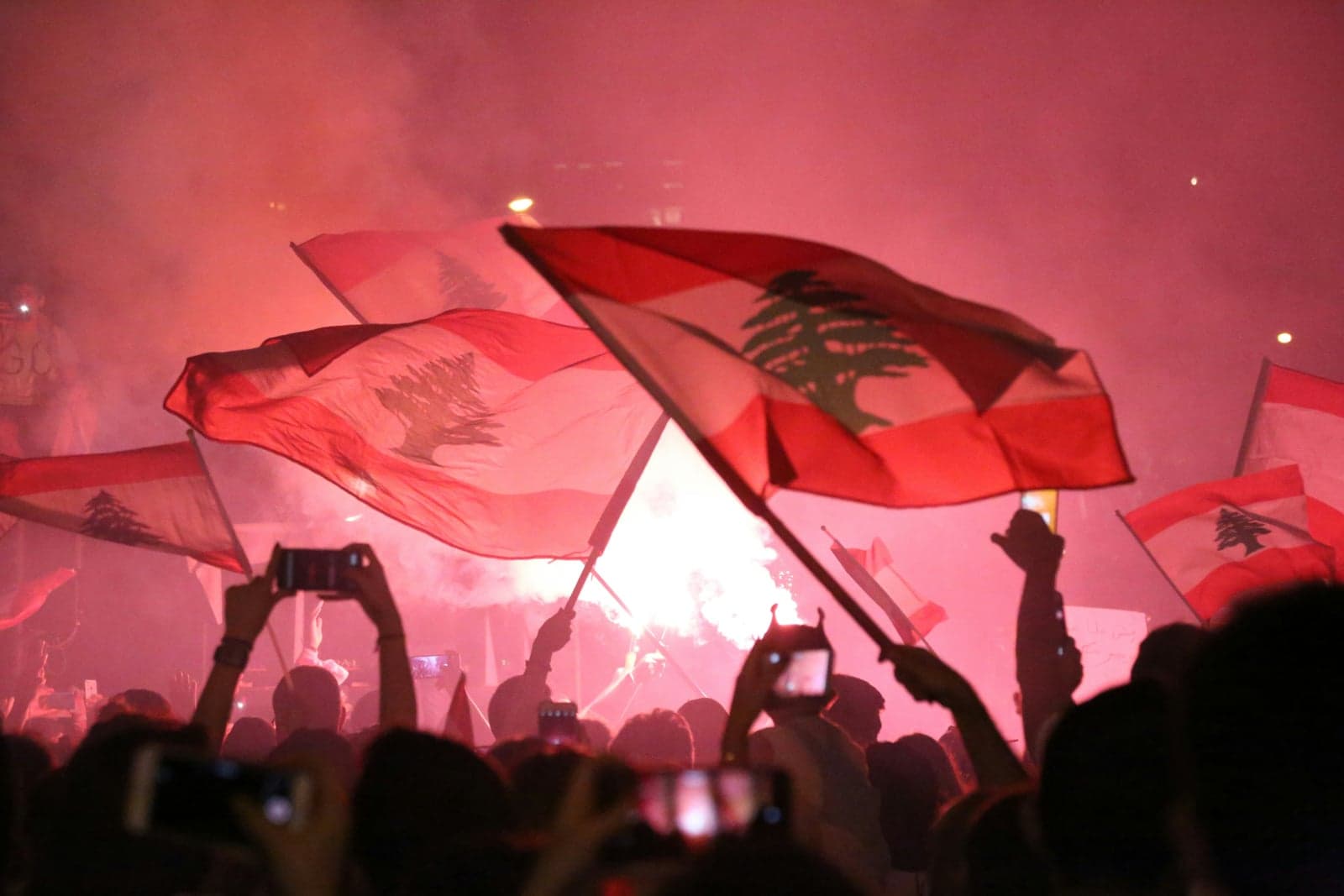
Politically, the system perpetuates cycles of crisis. It diffuses responsibility so that no single actor can be held fully accountable, yet the collective elite retains control. Public frustration builds without outlet, occasionally erupting in protest but rarely translating into structural change.
In the current geopolitical environment, these weaknesses compound. Lebanon cannot project strength or negotiate effectively while its domestic architecture fragments authority. The result is prolonged vulnerability to external pressures and internal stagnation.
Lebanon’s sectarian system continues to deliver exactly what it was engineered to produce: protection for entrenched elites at the expense of state capacity. The ongoing Israel talks and stalled domestic reforms are not anomalies but demonstrations of its logic. Until the country confronts the design itself rather than treating its symptoms as isolated failures, the pattern of elite impunity, institutional weakness, and geopolitical marginalization will persist. The system is not failing Lebanon. It is succeeding on its own terms.