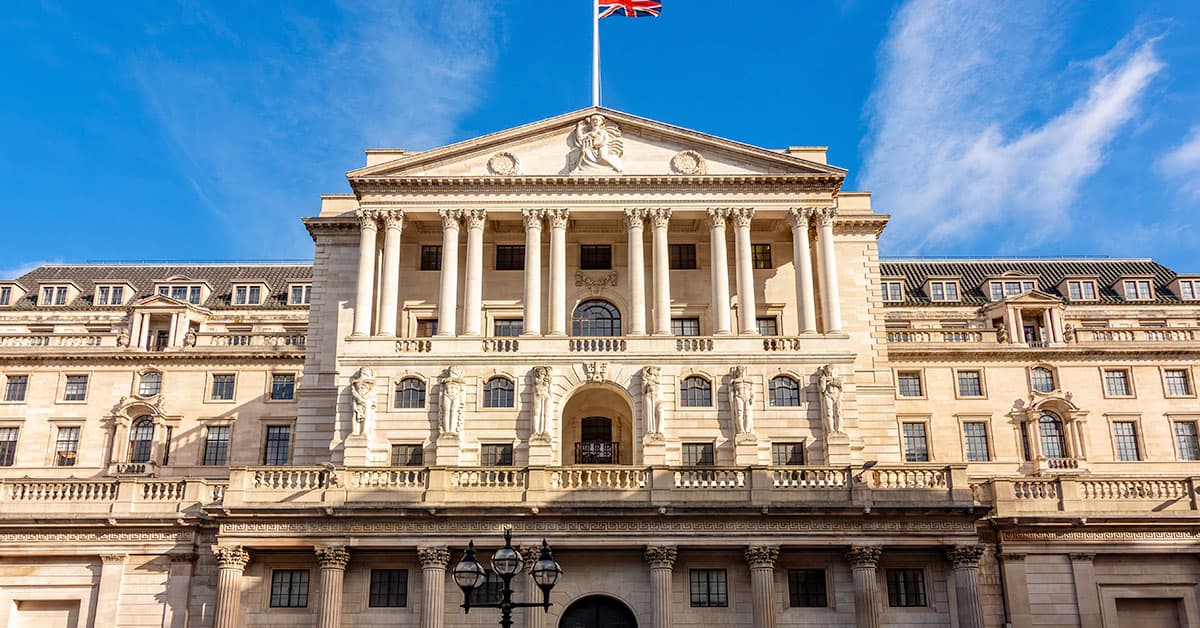
The repeated referral of corruption charges against former Banque du Liban governor Riad Salameh to higher courts, with no trial date set as of early 2026, shows how Lebanon’s justice system absorbs high-profile financial cases without delivering verdicts.
In January 2026, judicial officials confirmed that the case involving alleged embezzlement of $44.8 million had been transferred to the Court of Cassation. Salameh, who led the central bank for three decades until July 2023, faces charges of embezzlement, forgery, and illicit enrichment alongside two legal advisers. He denies wrongdoing. The move follows his release on $14 million bail in September 2025 after nearly a year in pretrial detention. Earlier steps included a presumptive indictment decision in April 2025. Yet the pattern remains unchanged: formal actions occur, momentum stalls, and accountability evaporates.
This is not an isolated procedural delay. It reflects the deeper architecture that keeps the core misconduct behind Lebanon’s 2019 financial collapse beyond reach.
The scale of the allegations
The charges focus on a narrow slice of alleged wrongdoing: roughly $44 million siphoned through commissions, shell companies, and creative accounting during Salameh’s tenure. A forensic audit by Alvarez & Marsal, completed in 2023, identified $111 million in illegitimate commissions and broader misconduct at the central bank between 2015 and 2020. Investigators have examined how public funds were allegedly diverted to benefit Salameh and close associates while the bank pursued “financial engineering” policies that masked growing deficits with high-yield instruments.
These practices contributed to the collapse. By late 2019, the central bank’s reserves were depleted, capital controls were imposed, and depositors lost access to their savings. Estimates of total losses from the crisis exceed $80 billion. The Salameh-era files sit at the center of that disaster, yet Lebanese proceedings have never expanded beyond select transfers.
Why domestic investigations stall
Lebanese courts have taken incremental steps. Salameh was arrested in September 2024 and spent months in detention. Judges have issued charges and referrals. But each advance encounters structural friction. Cases move from investigative judges to indictment chambers, then to the Court of Cassation, where further review is required. No trial date has been scheduled for the current charges.
This pattern is not accidental. The judiciary operates within Lebanon’s confessional power-sharing framework, where appointments and case assignments often align with political and sectarian balances. Investigative judges handling sensitive financial files have faced reassignment or procedural challenges in past high-profile matters. The result is a system that generates activity without resolution.
Salameh’s defenders argue the charges are politically motivated. His supporters note that he maintained currency stability for years and that the broader crisis involved multiple actors. Yet the absence of a completed domestic trial after more than six years of formal probes underscores a consistent outcome: the most powerful financial cases remain open indefinitely.
Elite protection networks at work
The blockage operates through several interlocking mechanisms. First, overlapping jurisdictions allow cases to be shifted between courts, creating repeated layers of review. Second, the central bank itself retains significant influence over financial records and expertise needed for prosecutions. Third, senior political figures across blocs have little incentive to accelerate proceedings that could expose wider complicity in the pre-2019 policies.
International partners have repeatedly highlighted these dynamics. Lebanon’s placement on financial watchlists stems partly from concerns over judicial independence and money laundering controls. Sanctions imposed by the United States, United Kingdom, and Canada in 2023 targeted Salameh and associates for corrupt enrichment through layered companies and European real estate.
European investigations—in France, Switzerland, and Germany—have produced asset freezes exceeding $130 million at their peak and ongoing money-laundering probes. These external efforts provide pressure and some transparency, yet they cannot substitute for domestic convictions. Lebanese authorities have cooperated selectively, but the core files remain under local control.
The economic and political price of impunity
The stalled central bank corruption probe carries immediate consequences. International financial institutions tie aid and restructuring talks to credible governance reforms. Without visible progress on high-level accountability, Lebanon struggles to unlock concessional financing or restore depositor confidence. Banks remain paralyzed, and the diaspora keeps capital offshore.
Politically, the situation feeds public cynicism. Citizens who lost life savings in the 2019 crisis see formal charges and bail releases as theater rather than justice. The selective pace of proceedings—active enough to deflect criticism, slow enough to avoid convictions—reinforces the perception that elite networks remain insulated.
This dynamic also affects the next generation of central bank leadership. Successors operate under the shadow of unresolved legacy cases, complicating efforts to rebuild credibility with markets and regulators.
Patterns that extend beyond one governor
The Salameh files illustrate a broader feature of Lebanon’s post-crisis landscape. Similar delays have marked other major financial investigations. Accusations surface, preliminary steps are taken, and then the system reverts to procedural stasis. The result is a judicial black hole: cases enter but never fully exit.
Non-obvious insight emerges here. The structure does not merely protect individuals; it preserves the policy framework that enabled the collapse. By keeping the central bank files open but unresolved, the system avoids a full reckoning with the financial engineering, reserve mismanagement, and elite access that defined the pre-2019 era. This preserves plausible deniability for a wide circle of beneficiaries while satisfying demands for “action.”
Structural change as the only exit
Lebanon’s central bank corruption probe has produced indictments, detentions, and international cooperation. What it has not produced is a trial verdict or recovered funds at scale. The January 2026 referral to the Court of Cassation follows the same script as previous stages: forward motion without closure.
Until the country severs the link between political influence and judicial timelines, equips financial prosecutors with genuine independence, and requires transparent asset disclosures from public officials, these files will continue to circulate without resolution. The banking scandal that triggered the collapse will remain officially open, its lessons unlearned and its costs unaddressed.
The real measure of progress is not another court referral. It is the day a verdict is delivered and enforced on the architects of the crisis. Until then, the central bank files remain the clearest evidence that impunity is not an accident but a feature of the system.