Oil sanctions are designed around visibility. A sanctioned cargo is supposed to become difficult to move because modern energy markets are heavily documented systems in which tankers file destinations, cargoes carry certificates of origin, ports generate customs records, banks require paperwork, insurers require traceability, and regulators rely on the accumulated output of all these processes to maintain the integrity of enforcement. The architecture of sanctions assumes that the more documentation a transaction requires, the harder it becomes to move prohibited goods without leaving a traceable record.
Ship-to-ship transfers exist in the space between those systems
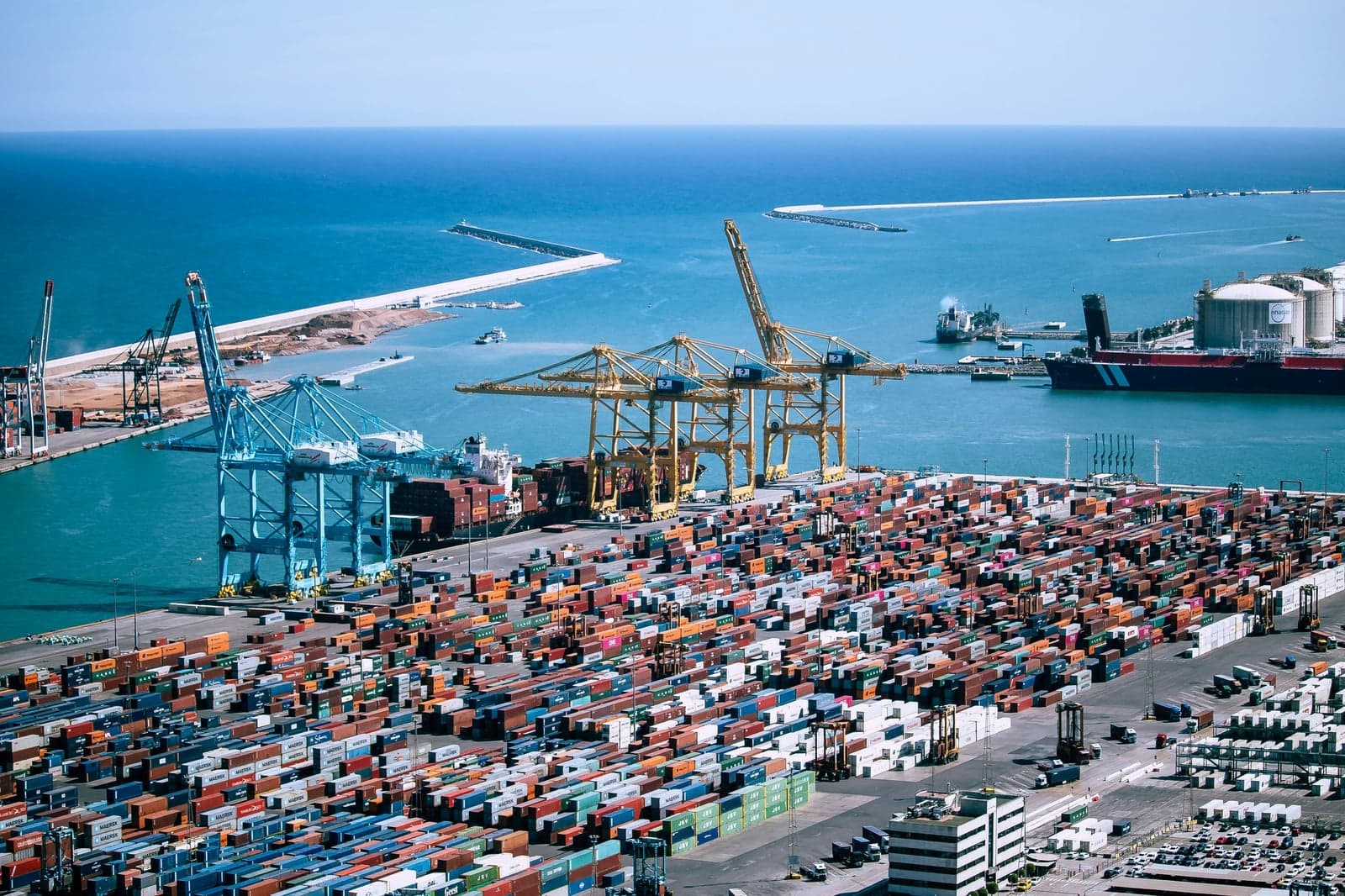
A ship-to-ship transfer, commonly abbreviated as an STS operation, occurs when oil cargo is moved from one tanker to another at sea rather than being discharged at a conventional port terminal. In legitimate commercial practice, STS operations are widely used across global shipping for purposes that have nothing to do with sanctions evasion: traders use them to consolidate partial cargoes, optimize freight costs, accommodate vessel size restrictions at particular terminals, or transfer crude between different tanker classes for the final leg of a voyage. The operation itself is legal, documented, and a recognized feature of international maritime logistics.
But the same mechanism creates an almost ideal environment for origin obfuscation, and that is where its significance to the sanctions story begins. Once a cargo is transferred offshore between two vessels, tracing where the oil actually came from becomes substantially more difficult, particularly when the transfer is combined with intermediary port calls, opaque corporate ownership structures, manipulation of Automatic Identification System signals, or the re-documentation of cargo through third-country entities that are not themselves subject to the original sanctions regime. Over the course of the past several years, STS transfers became one of the defining logistical instruments of the sanctions-era global oil trade, reaching particular prominence after Western restrictions were imposed on Russian crude and petroleum product exports following the 2022 invasion of Ukraine.
Lebanon entered that ecosystem quietly, and in a way that distinguished it from the more obvious nodes in the shadow trade network. Not as a producer of oil. Not as a refining power capable of transforming Russian crude into a product that no longer appeared Russian on a certificate of analysis. But as a weakly regulated import environment operating through fuel procurement structures that were already deeply opaque, already politically protected, and already resistant to external scrutiny long before the intensification of Russian sanctions made those characteristics commercially attractive to the traders and intermediaries who needed them.
The offshore layer nobody sees
Most people who encounter the phrase “sanctions evasion” construct a mental image drawn from an older era of trade restriction: secret pipelines, forged passports, goods moving through deserts at night under the supervision of smuggling networks. The architecture of modern oil sanctions evasion is almost entirely different. It is, in the main, administrative rather than clandestine, operating through the formal documentation systems of international trade rather than around them.
A tanker loads its cargo in one jurisdiction and files the appropriate departure documentation. Another vessel receives that cargo at a predetermined offshore location, and the receiving vessel's documentation is updated to reflect a different origin, a different cargo specification, or a different consignor. The cargo may be blended with product from another origin to alter its chemical fingerprint. It may be routed through an intermediary port in a jurisdiction that neither applies the original sanctions regime nor coordinates closely with the jurisdictions that do. Documentation changes hands multiple times before final delivery, passing through traders, brokers, storage operators, testing laboratories, and logistics contractors, each of whom may have plausible grounds to claim they did not know the nature of what they were handling when they handled it.
By the time the oil reaches its end destination, it may no longer appear Russian on any piece of paper in the chain. Operationally, however, nothing meaningful has changed except the documentation trail, and the legal responsibility for what that trail obscures has been fragmented so thoroughly across so many jurisdictions and intermediaries that identifying a single accountable party becomes a task requiring years of coordinated international investigation rather than a straightforward regulatory enforcement action.
Investigations published in 2025 described how Russian fuel allegedly entered Lebanon through precisely this kind of layered routing architecture, involving intermediary stages in Egypt and Turkey alongside offshore ship-to-ship operations that complicated the attribution of origin. No single shipment and no single transaction was the point. The structure itself was the story. The significance of modern sanctions evasion architecture lies not in any individual cargo movement but in the systemic design of the intermediary chain, which is built to ensure that the complexity of attribution becomes a form of legal insulation for everyone involved in it.
Lebanon's fuel system was already built for opacity
To understand why Lebanon became structurally vulnerable to this type of trade architecture, it is necessary to understand how Lebanon's fuel and electricity procurement system was constructed long before Russian sanctions created a new commercial incentive for opacity.
Lebanon's electricity sector has been, for most of its post-civil war history, a study in institutionalized dysfunction that served political and commercial interests far more reliably than it served the public. The state electricity utility, Electricite du Liban, has operated for decades at catastrophic financial loss, providing Lebanese households and businesses with a drastically inadequate supply of power while absorbing billions of dollars in state subsidies that never produced the infrastructure improvement they were nominally intended to fund. The gap between the electricity the grid supplied and the electricity the population required was filled by a private generator sector that operated as a commercial monopoly in most neighborhoods, charging unregulated prices to a captive consumer base with no alternative.
Fuel procurement operated in a parallel world of similar opacity. The Sonatrach supply arrangement provides an instructive example of how formal state agreements could mask the practical realities of private operational control. On paper, fuel entered Lebanon through a state-to-state framework between the Lebanese government and Algeria's national energy company, an arrangement whose official character was intended to convey stability, pricing transparency, and accountability. In practice, private traders handled sourcing, transportation, and delivery operations behind the formal structure, in a subcontracting architecture that created multiple layers of distance between the documented agreement at the state level and the commercial decisions actually being made about where fuel came from, who handled it, and on what terms.
That distance is not incidental to the corruption story. It is the mechanism through which accountability is structurally weakened in procurement systems that are designed, or allowed to evolve, around political protection rather than public interest. When operational responsibility is distributed across subcontracting layers, the answers to basic questions of provenance become genuinely difficult to isolate. Who sourced the cargo? Who verified its origin? Who conducted or commissioned quality testing? Who prepared and signed the documentation? Who arranged transport and assumed maritime liability? Who approved final delivery against the terms of the procurement contract? In a well-governed procurement system, those answers are documented, accessible, and auditable. In a system built on opacity, they become deliberately fragmented, and that fragmentation is what makes the system useful to parties who need responsibility to be hard to assign.
According to reporting referenced in multiple investigations of Lebanon's fuel sector, Lebanese authorities at various points investigated shipments allegedly linked to falsified certificates of origin through which Russian fuel was presented as Egyptian product for the purpose of entry into the Lebanese supply chain. BB Energy, a commodity trader operating in the Lebanese market, denied wrongdoing and stated that it complied fully with applicable sanctions requirements. The denial is part of the record and must be stated as such. But the larger significance of these investigations lies not in any particular company's culpability but in the systemic question they raise: why does Lebanon repeatedly appear as a vulnerable point in exactly this type of opaque fuel movement, and what is it about the architecture of the country's procurement system that makes it consistently susceptible to these arrangements?
Ship-to-ship transfers thrive where oversight is politically fragmented
The answer to that systemic question begins with the observation that effective sanctions enforcement, like effective regulation of any complex commercial sector, requires institutional coordination across multiple bodies that are capable of operating independently of one another and sharing information without political interference distorting the process. Customs authorities, energy ministries, port administrations, testing laboratories, financial regulators, maritime insurers, and judicial bodies all need to function as genuinely separate components of an oversight system, each capable of generating findings that can be acted upon regardless of whose commercial or political interests those findings might threaten.
Lebanon's oversight system for fuel procurement has historically operated on a different basis entirely, and the gap between the theoretical independence of its institutions and their practical operation under political pressure is a recurring theme in every serious analysis of the country's energy sector.
Within an environment of this kind, offshore transfer systems become substantially harder to scrutinize for reasons that are structural rather than accidental
The first of those reasons is that maritime operations generate natural complexity that creates what investigators and prosecutors call plausible deniability. STS operations are legal. They occur in international waters. They are not, in themselves, evidence of wrongdoing. Cargoes transferred offshore can be blended with product from other origins in ways that alter their chemical profile. Documentation can be updated mid-route to reflect a new declared origin. Intermediary jurisdictions can issue their own certificates that, on their face, appear to originate the cargo locally rather than in a sanctioned country. Ownership of the cargo can shift between shell entities incorporated in different jurisdictions at each stage of the chain. Every additional layer of this kind creates another structural opportunity for responsibility to disperse, and the legal complexity of establishing which actor in the chain knew what, and when, is precisely what makes the architecture so difficult to prosecute effectively even when investigators are aware of what has occurred.
The second reason is that weak enforcement environments reduce the operational risk calculation for parties engaged in high-risk trade structures. When investigations stall, when enforcement actions are inconsistent, when politically sensitive corruption cases involving commercial actors who are connected to powerful figures move slowly through judicial processes and frequently fail to reach resolution, the deterrent function of the enforcement system degrades. Lebanon's fuel sector has experienced precisely this pattern repeatedly, with investigations opening, stalling, and in some cases effectively ceasing without producing the kind of accountability that would make future violations less commercially attractive.
The third reason is that political and commercial overlap within procurement ecosystems creates what might be described as systemic insulation, a condition in which scrutiny itself becomes difficult to sustain institutionally because the institutions responsible for applying it are entangled with the commercial interests that would be damaged by rigorous enforcement. Research into Lebanon's fuel import structures has consistently identified overlapping relationships between procurement actors and politically powerful figures, including networks connected to significant political actors across Lebanon's sectarian political spectrum. The consequence of that overlap is not simply that individual corruption cases become difficult to pursue. It is that the infrastructure for sustained institutional scrutiny becomes difficult to build and maintain, because building it requires political will from actors whose own networks are among its primary subjects.
The modern sanctions economy runs offshore
The global energy market did not stop buying sanctioned oil after 2022. It adapted, and the adaptation was systematic, sophisticated, and rapid. A parallel logistics ecosystem emerged almost immediately after the imposition of Western price caps and export restrictions on Russian crude, built around a fleet of aging tankers operating under flags of convenience in jurisdictions that did not enforce Western sanctions, owned through corporate structures in places that did not require transparency about beneficial ownership, and serviced by maritime insurers, classification societies, and financial institutions willing to operate outside the established Western framework.
The defining operational features of this ecosystem were precisely the instruments that STS transfers facilitate: blending of sanctioned with non-sanctioned product to obscure origin; re-documentation through intermediary jurisdictions; manipulation or disabling of AIS tracking signals to reduce the observability of vessel movements; reflagging of tankers to jurisdictions with weak maritime oversight; and the fragmentation of cargo ownership across multiple entities in multiple jurisdictions to complicate the attribution of legal responsibility at any single point in the chain. What analysts now describe as the shadow maritime economy is not an underground network in any conventional sense. It is a parallel logistical infrastructure that operates largely in plain sight, exploiting the gap between the ambition of sanctions enforcement and the practical limitations of coordinated international oversight.
Lebanon did not design or construct that system. Its position in the shadow trade architecture, to the extent that it has one, is not that of an orchestrating power but of a vulnerable environment whose pre-existing structural characteristics made it useful to actors who needed opacity, political protection, and weak enforcement for the movement of cargoes that could not withstand examination. The opacity was already there. The political protection was already there. The weak institutional oversight was already there. The sanctions-era shadow trade did not create those conditions. It found them and used them.
That distinction matters for understanding what the STS issue actually signifies in the Lebanese context. The story is not one tanker, one shipment, or one company whose conduct on a particular voyage may or may not have crossed a legal line. The story is the structural condition that makes Lebanon a recurring point of vulnerability in exactly this type of trade architecture, and the question of whether that condition is the product of passive institutional failure or of active political choices by actors who benefit from its continuation.
What the structure reveals
Ship-to-ship transfers are a diagnostic instrument as much as they are an operational mechanism. When a country appears repeatedly at points in STS-enabled routing chains that move sensitive cargoes, the question its presence raises is not primarily about the transfers themselves. It is about the governance environment that makes the transfers possible, attractive, and low-risk for the parties arranging them.
Modern sanctions evasion does not depend primarily on secrecy. It depends on fragmentation: the deliberate distribution of a transaction across enough jurisdictions, entities, and documentary stages that no single enforcement action can capture the whole picture, and no single jurisdiction has both the legal authority and the institutional capacity to pursue the full chain. Fragmented systems are hardest to police when political protection, weak institutions, and commercial opacity already exist as structural features of the environment rather than being introduced specifically for the purpose of a particular evasion scheme.
Lebanon's fuel procurement system, as documented across years of investigative reporting, academic analysis, and international regulatory assessments, exhibits exactly those characteristics. The political protection of commercial networks in the fuel sector is not a new phenomenon introduced by the shadow trade. The weakness of institutional oversight over import documentation, cargo testing, and origin certification is not a gap that appeared recently. The opacity of the procurement structures through which fuel has historically entered Lebanon is not a vulnerability created by the specific dynamics of Russian sanctions enforcement.
All of it predates the sanctions era. The sanctions era simply created a new set of commercial actors who found that predating structure useful, and a new set of cargoes for which its characteristics were particularly valuable.
That is the real significance of the ship-to-ship transfer story in Lebanon. Not what happened on a particular vessel on a particular voyage in the eastern Mediterranean. But what the repeated appearance of Lebanon in these trade architectures reveals about the governance of its energy sector, about the political economy that has protected that governance from reform, and about the cost that ordinary Lebanese people continue to pay, in electricity bills, in generator fuel prices, and in the ongoing absence of accountability, for a system that was never designed to serve them.